• Refine Your Search:

Art Education Students, Alumni and Faculty Represent FSU at 2025 FAEA Annual Conference

Founded in 1952, The Florida Art Education Association is Florida’s Statewide Visual Arts Teachers Education Membership Association.…

Photos: FSU Department of Art Education Celebrates Spring 2025 Graduates

The Florida State University Department of Art Education held a reception and ceremony to honor…

Five questions with Kaylee Spencer: Exploring Latin American Indigenous art at MoFA 

By: Anna Prentiss  Kaylee Spencer, who joined Florida State University in August 2024, has stepped…

PhD Students’ Research Journey Transformed into Exhibition at WJB Gallery

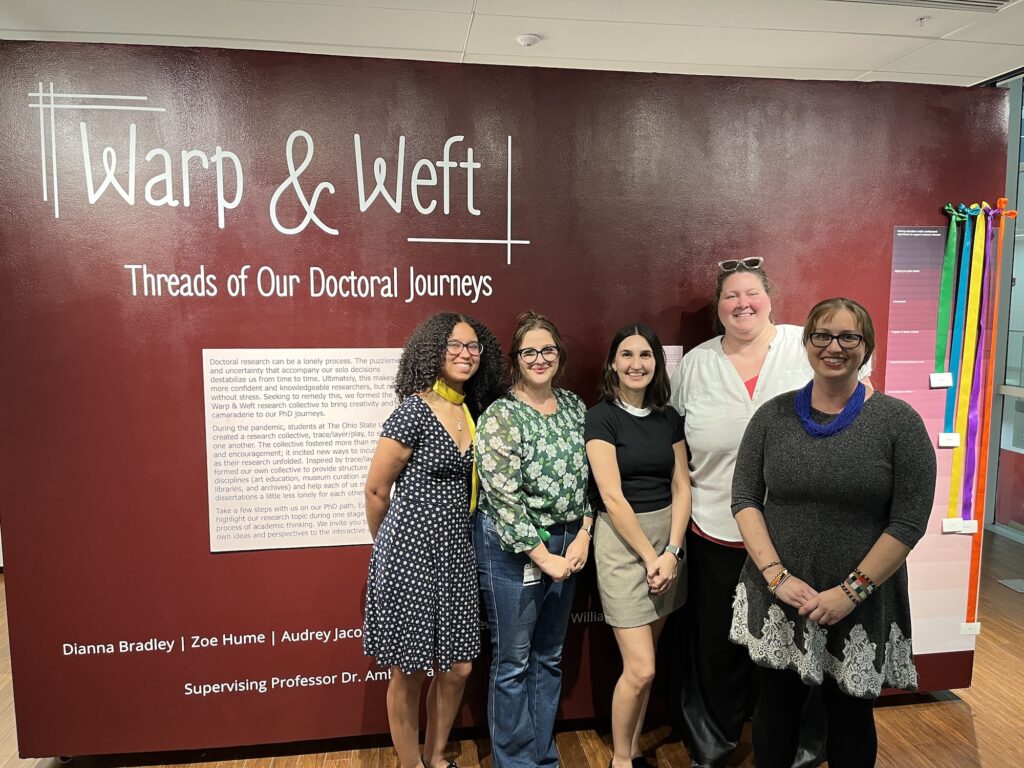
A group of students stand in front of a red wall with vinyl text on it that says "Warp & Weft"
Four students and a recent graduate of the Museum Education & Visitor Centered Curation program showcased their research in an exhibition at WJB Gallery.

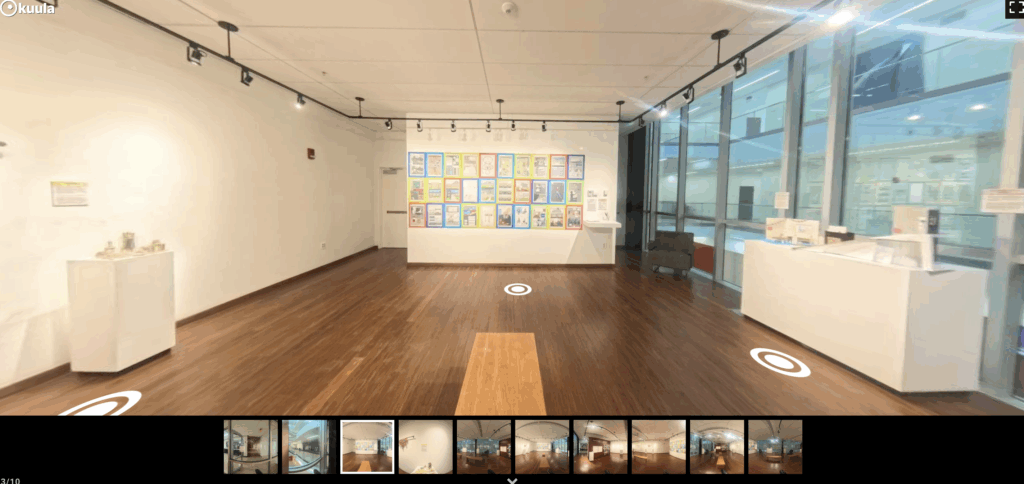
PhD students from the Department of Art Education transformed their research process into visual interpretation and created experiences for visitors to engage with under the exhibition “Warp & Weft” at the WJB Gallery. Four current museum education and visitor-centered curation doctoral students Ashley Williams, Audrey Jacobs, Dianna Bradley and Zoe Hume participated along with Catherine Usewicz, PhD, a recent art education graduate.

Inspired by The Ohio State University’s research incubator and collective, trace, layer, play, and the theoretical concept of communities of practice, this exhibition transformed the WJB Gallery into a learning lab where visitors experienced visual representations of the researchers’ dissertations and co-created within the exhibition’s interactives. Like doctoral students at OSU’s Department of Arts Administration, Education and Policy program, the doctoral students began the “Warp & Weft” research collective to support each other through their respective academic journeys. The group originally came together when fellow doctoral student, Paul Gabbard, brought up trace, layer, play, as a model for doctoral community building, a framework that resonated with their existing Sunday writing group. Every other Sunday, the researchers met over Zoom to share their dissertation process and ideas for the exhibition. They would share a bloom (something we’re working on, or coming up), a rose (something positive), and a thorn (a challenge we’re having).
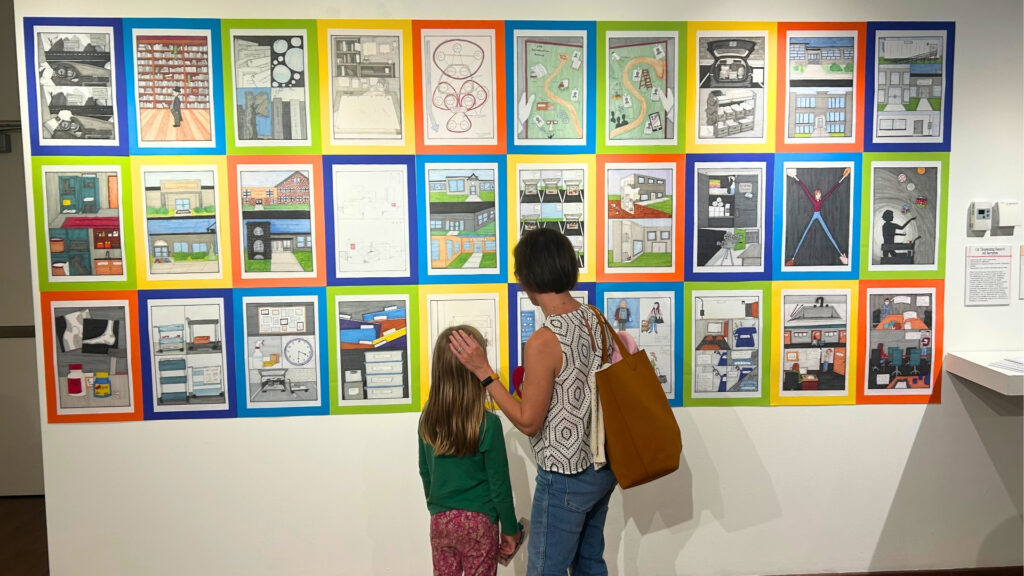
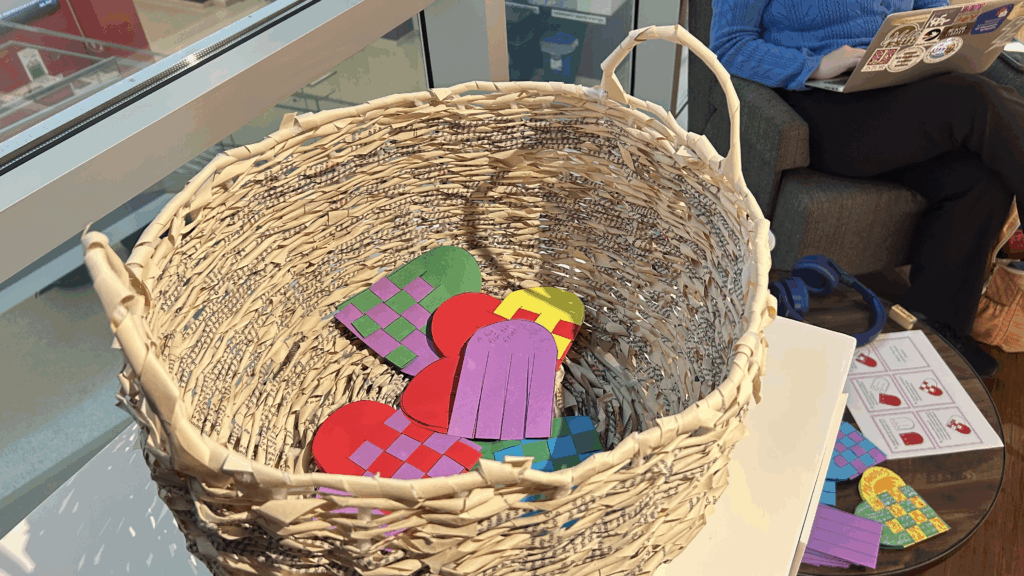
“For the exhibition, each of us developed projects that visualized an aspect of our own dissertation topic and/or research process, giving form to the often intangible work of academic inquiry,” explained the researchers. “Together, these works invite visitors into the doctoral experience, from coursework to public defense. We hope the exhibition highlights our experiences, while also demystifying what the doctoral process might look like.”

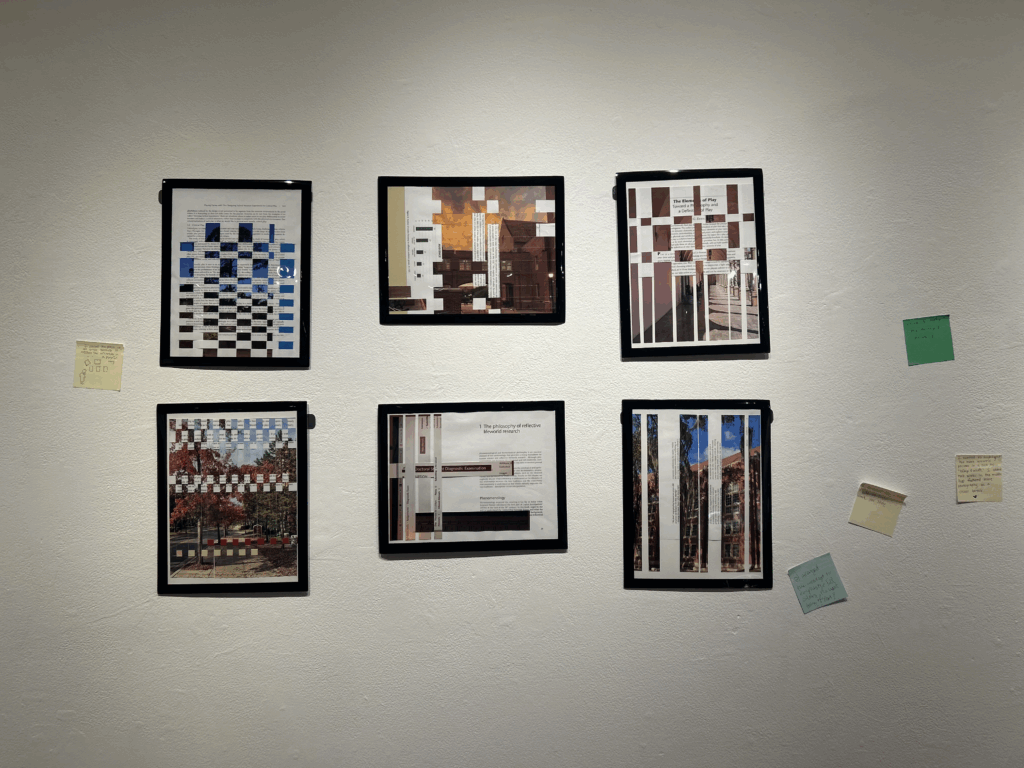
Their voices, research interests, and subjectivities have been embodied and materialized in the interactive activities: Ashley focused on role-playing and invited visitors to experience curation by arranging the works of art she created using literature she read and photos from Florida State University. Zoe focused on a sense of belonging and how research is a block-building process with prompts for people to engage with art-making and writing with hanging rings and blocks. Catherine displayed how she transformed the interview data about her research into visual narratives and invited visitors to participate under relevant themes. Audrey demonstrated the pedagogical model for visitors to interact with and ponder questions about collaboration between schools and museums. Dianna showed the basket she built from the studies she read to reflect on the meaning-making journey in the literature review. She also invited people to create a heart basket interwoven with two pieces of paper, where they can be prompted to reflect on their passions and identities, or on other thoughts, and document it on the heart. In addition, the researchers also collectively provided a panel with different research themes for visitors to develop their own research topics. Here, we learn more about their exhibition-developing process and reflection:

“One of the most rewarding parts of this experience for me has been the increased sense of community. As we discuss in our exhibition, doctoral research can be a really isolating and lonely process, so creating space to come together through dialogue was really powerful. Having the opportunity to then literally bring our research together in an exhibition was a fun and creative method of pushing beyond the sense of community Warp & Weft created to invite the entire FSU community to be part of our journeys.”
-Zoe Hume

“I really enjoyed the process of working together to show different ways we visually think of this doctoral journey. I resonated with Ashley’s process of moving sections and ideas around – as if curating the dissertation. I think the exhibition highlights how unique the process is even when taking the same steps to complete it.”
-Dianna Bradley

“When I first joined the program, I knew that collaborative work was an aspect I wanted to make integral to my experience. I wanted to avoid the prospect of being an island, which has often been the feeling as an art teacher. I also wanted to explore the intersections of each of our works and celebrate the diverse approaches we all brought to the installation.”
-Catherine Usewicz

“My work at the intersection of formal (school) and informal (museum) learning has often led me to think about what these environments have in common and how they can work across organizational differences. My PhD research aims to visualize the learning that happens through this kind of work. In the exhibition, I was asking everyone to make those processes and features visible with me through how they think art museums and schools can combine forces in education.”
-Audrey Jacobs

“I appreciated the sense of community we built leading up to the exhibition. Since most of us are not on campus, meeting over Zoom helped us maintain the connections we formed during the coursework phase of the doctoral program. It was incredibly rewarding to see the ideas and prototypes everyone had shared over the past several months come together in the gallery. I thought it was interesting how each of us developed entirely different activities and works of art. Even though we’re all navigating the dissertation process, our art and gallery activities reflect how varied everyone’s doctoral journey can be.”
-Ashley Williams
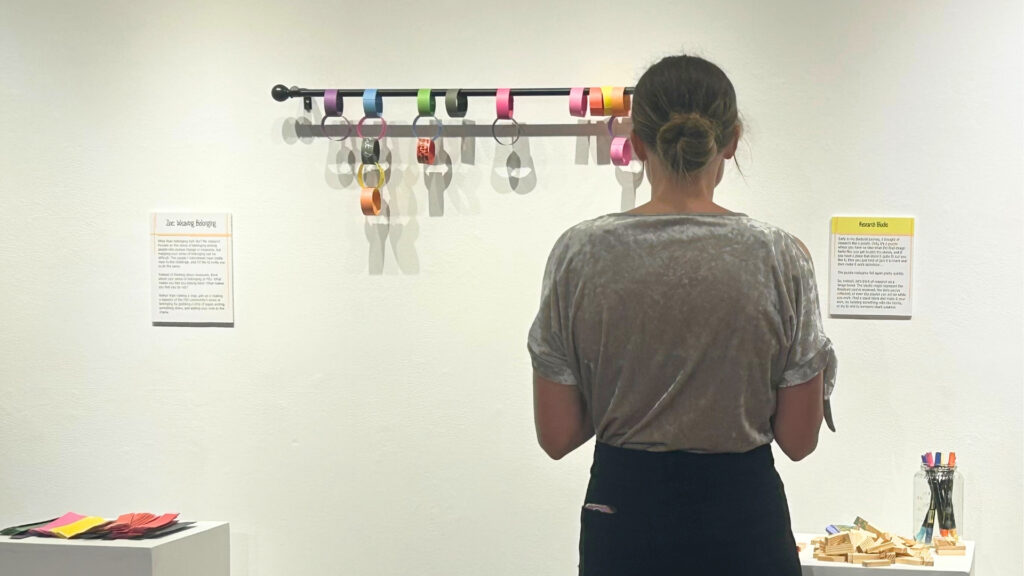
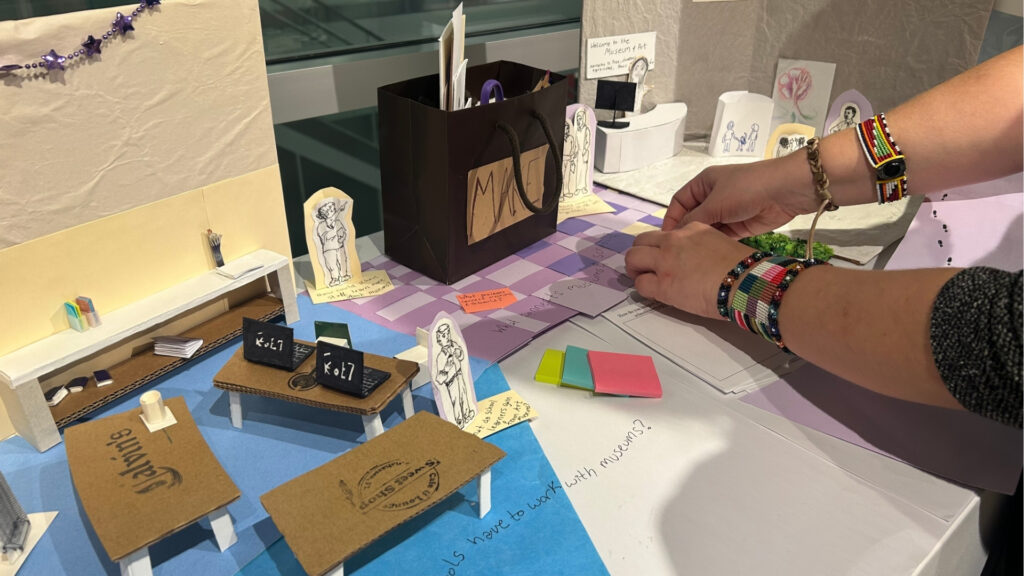
Engaging different stages of the research processes not in a scholarly paper but through interactive activities may also shed light on how we can think about these topics creatively and what possibilities it may bring to us.
Special Message: Celebrating the Retirement of Dr. Barbara Parker-Bell

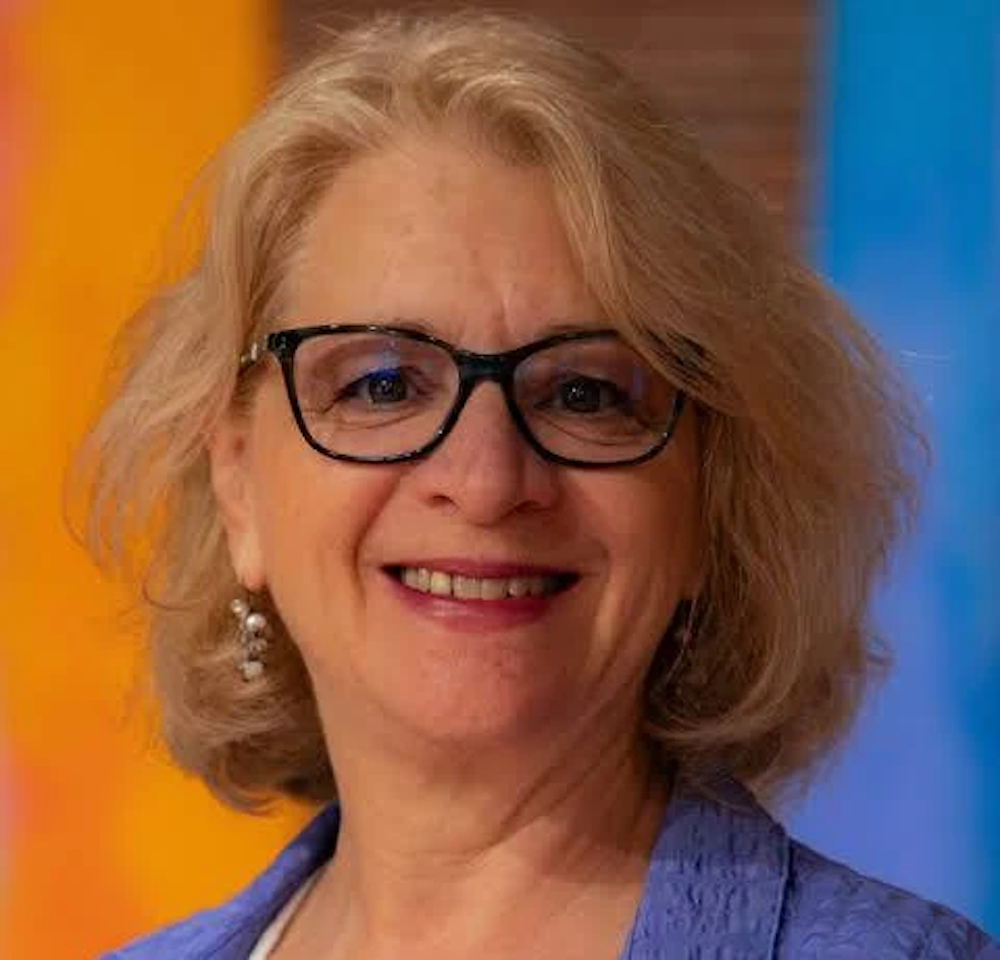
A smiling woman wearing dark rimmed glasses,
Dr. Barbara Parker Bell

We celebrate a remarkable milestone in the career of Dr. Barbara Parker-Bell as she steps into a well-earned retirement. The FSU Art Education Department and Art Therapy programs extend our heartfelt congratulations and warmest wishes as she begins this next chapter.

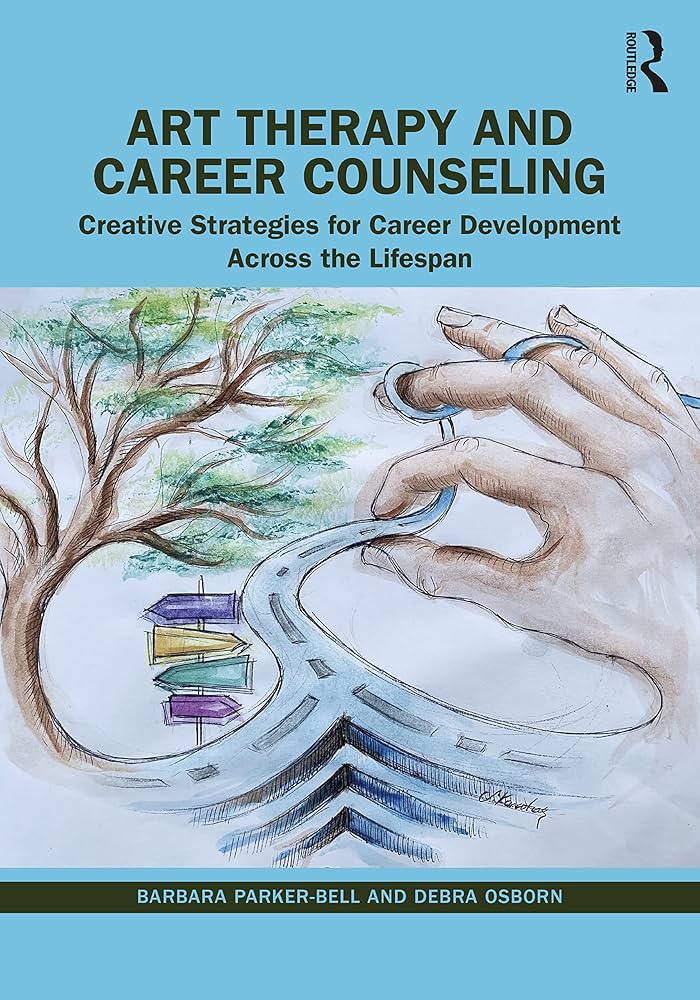
Dr. Parker-Bell joined FSU in spring 2017 as Program Director, quickly immersing herself in the accreditation process for the Master of Science in Art Therapy program through CAAHEP. This effort resulted in accreditation in 2019, an achievement the program has proudly maintained. She has since guided both the master’s and doctoral programs with unwavering dedication. Her influence extends well beyond campus through her service as past president of the Art Therapy Credentials Board, her leadership within the American Art Therapy Association, and her work as a Fulbright Scholar in Russia. Her scholarship also includes co-authoring the seminal Art Therapy and Career Counseling: Creative Strategies for Career Development across the Lifespan with Dr. Debra Osborn.

Dr. Osborn reflected on the evolution of their creative partnership, describing their “chance” encounter that unexpectedly blossomed into “a creative partnership and beautiful friendship.” Their weekly meetings, she shared, became a highlight of her week. Dr. Osborn noted that in a research-driven environment, she had “silenced the more creative side” of herself, but Dr. Parker-Bell’s “encouragement and playfulness” helped her recover that voice. She praised Barbara’s courage in focusing on a field “not always completely celebrated,” adding, “By walking beside me… I’ve always known that I’ve had someone to share the excitement, the fear, the letdowns and also the successes with.”

Colleagues echoed similar admiration. Dr. Amber Ward shared that it is “hard to imagine the department without Barbara’s warmth, creativity, and playful spirit,” noting that her “deep care for students and colleagues will have a lasting impact.” While Dr. Jeff Broome reflected on her far-reaching contributions “from Tallahassee to Russia,” expressing gratitude for her leadership carried out “with grace, diplomacy, and warmth during sometimes very tricky and sticky times.”

Dr. Karina Donald described the privilege of working near her, recalling cherished moments of “popping my head into her office” and missing her “warm, unmistakable laugh that would ripple down the first floor corner of the William Johnston Building.” She marveled at Dr. Parker-Bell’s ability to “wear so many hats with such grace” and described her mentorship as “a gift.”

“Dr. Parker-Bell was (and still is!) a wealth of knowledge and always willing to help us students. I am so excited to see what is next for her in this new chapter of life and wish her all the best.”

Jasmine Blake

Dr. Nancy Gerber emphasized Dr. Parker-Bell’s leadership as both welcoming and highly effective, calling her “a stellar leader who creates a welcoming environment and stewards a highly functional program.” She praised her “humor, generosity of spirit, and humanity,” sharing memories of their years working together which were punctuated by watching Phillies and Eagles games side by side.

Students also offered touching messages expressing how Dr. Parker-Bell shaped their learning, growth, and sense of belonging. A second-year student shared, “She showed me that becoming an art therapist is more than a career, it is a way of experiencing the world.” Lena Ciardi described her as “the paintbrush that is painting my way, clearing my vision…challenging me in many ways to foster personal and professional growth.” 

International student Cole Lin wrote about feeling “especially seen and supported” by her. She vividly recalled Dr. Parker-Bell sitting under a flowering tree “almost hidden in a ‘flower cave,’” greeting students on Halloween with a purple puppet, and offering the kind of iconic laugh that made others feel “supported and at ease.”

Other students expressed gratitude for her positivity, humor, and mentorship. One student described her as “a guiding light,” another wished her “a retirement full of happy memories and new adventures.” One student cherished a class moment when Dr. Parker-Bell invited everyone to play instruments from her travels, creating “a unified, raucous, symphonic eruption” that lifted the room’s spirit.


A former student also shared their appreciation and wishes for Dr. Parker-Bell as she enters retirement:

“Dr. Parker-Bell was (and still is!) a wealth of knowledge and always willing to help us students,” said Jasmine Blake.” I am so excited to see what is next for her in this new chapter of life and wish her all the best.”

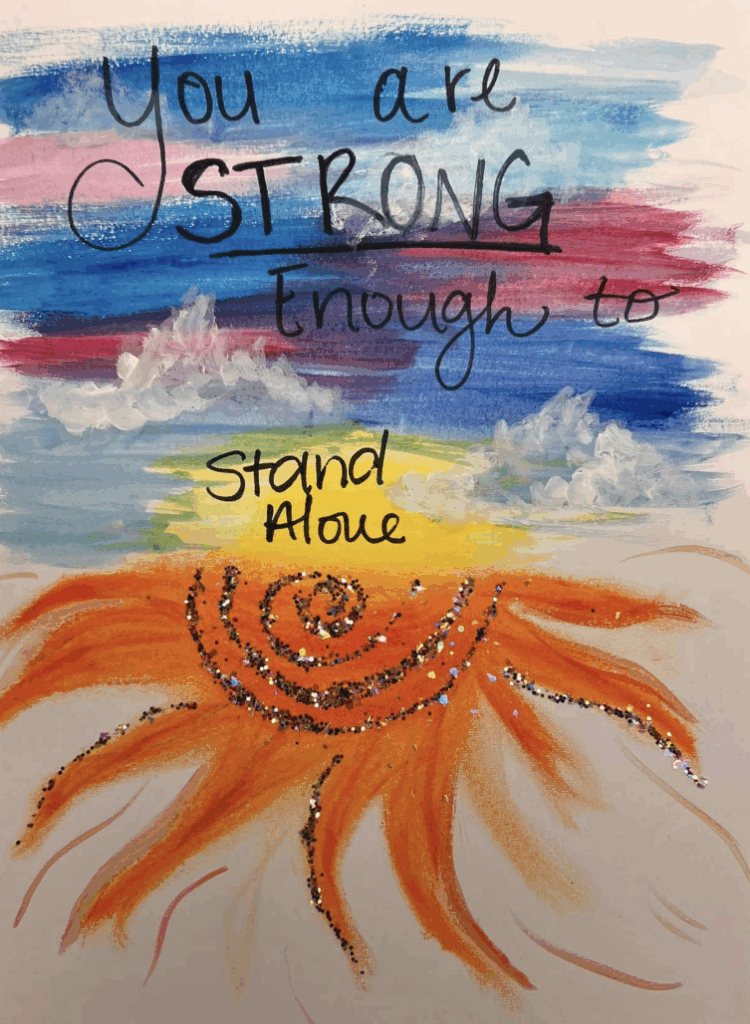
Jasmine also shared artwork in memory of her class with Dr. Parker-Bell in Introduction to Counseling, reflecting hopes for the future.       

Dr. Parker-Bell’s contribution to Florida State University is one of compassion, excellence, and steadfast dedication to the field of art therapy. Her leadership has shaped programs, supported colleagues, inspired students, and elevated the profession. We honor her with great appreciation and with excitement for the creativity, joy, and well-deserved rest that await her in retirement.

Congratulations, Dr. Parker-Bell! Thanks for everything.