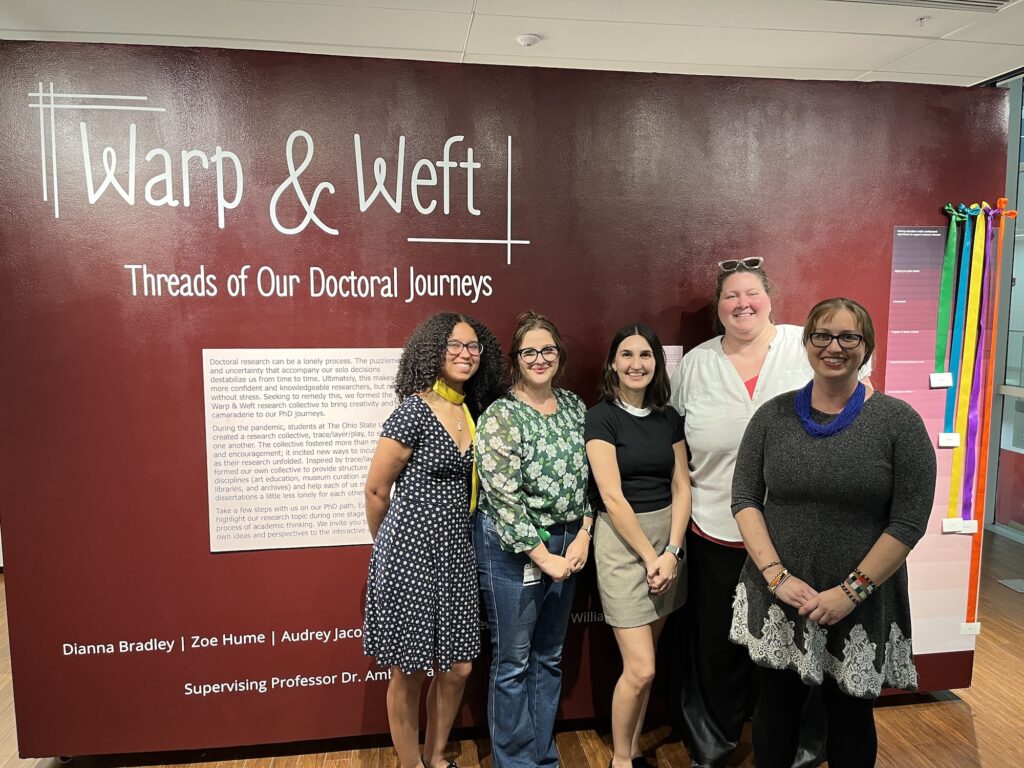
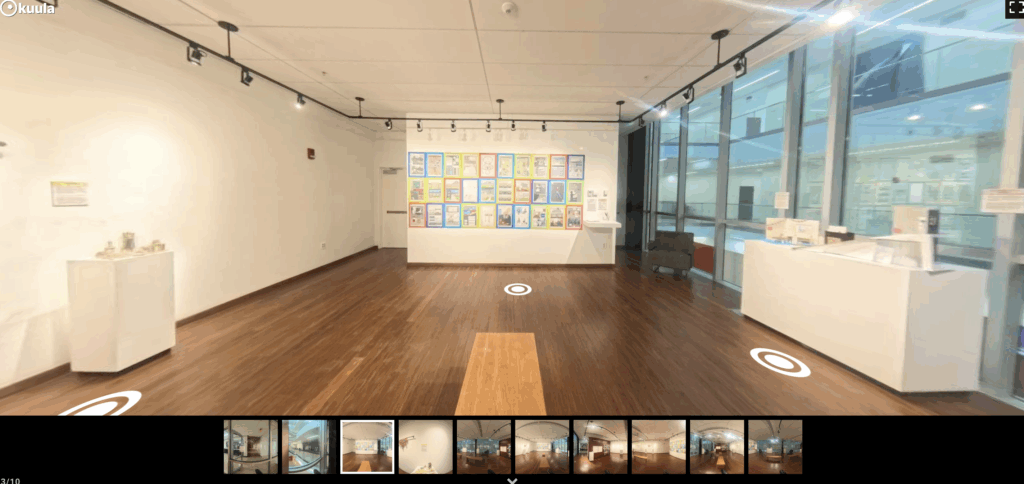
PhD students from the Department of Art Education transformed their research process into visual interpretation and created experiences for visitors to engage with under the exhibition “Warp & Weft” at the WJB Gallery. Four current museum education and visitor-centered curation doctoral students Ashley Williams, Audrey Jacobs, Dianna Bradley and Zoe Hume participated along with Catherine Usewicz, PhD, a recent art education graduate.
Inspired by The Ohio State University’s research incubator and collective, trace, layer, play, and the theoretical concept of communities of practice, this exhibition transformed the WJB Gallery into a learning lab where visitors experienced visual representations of the researchers’ dissertations and co-created within the exhibition’s interactives. Like doctoral students at OSU’s Department of Arts Administration, Education and Policy program, the doctoral students began the “Warp & Weft” research collective to support each other through their respective academic journeys. The group originally came together when fellow doctoral student, Paul Gabbard, brought up trace, layer, play, as a model for doctoral community building, a framework that resonated with their existing Sunday writing group. Every other Sunday, the researchers met over Zoom to share their dissertation process and ideas for the exhibition. They would share a bloom (something we’re working on, or coming up), a rose (something positive), and a thorn (a challenge we’re having).
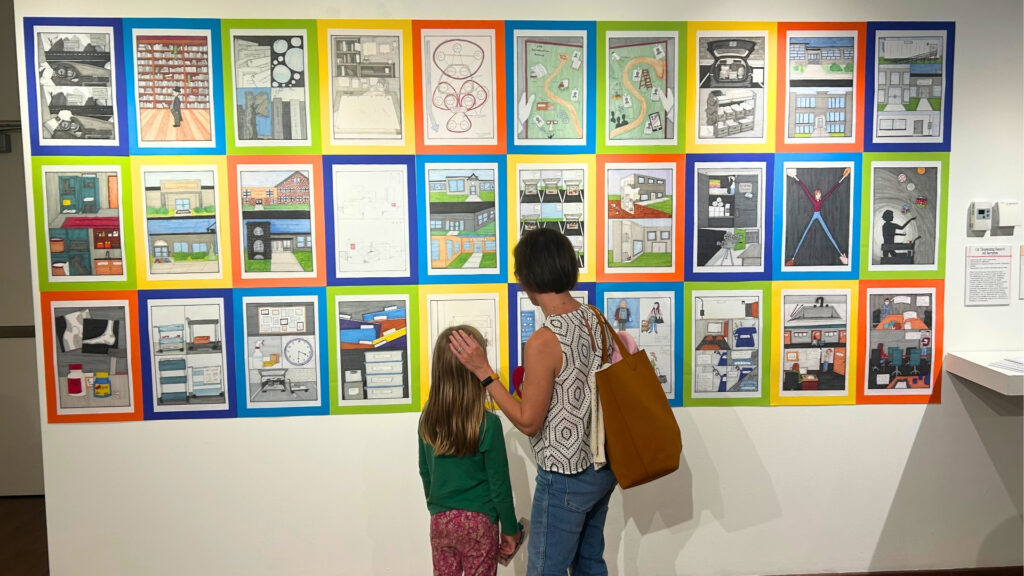
“For the exhibition, each of us developed projects that visualized an aspect of our own dissertation topic and/or research process, giving form to the often intangible work of academic inquiry,” explained the researchers. “Together, these works invite visitors into the doctoral experience, from coursework to public defense. We hope the exhibition highlights our experiences, while also demystifying what the doctoral process might look like.”
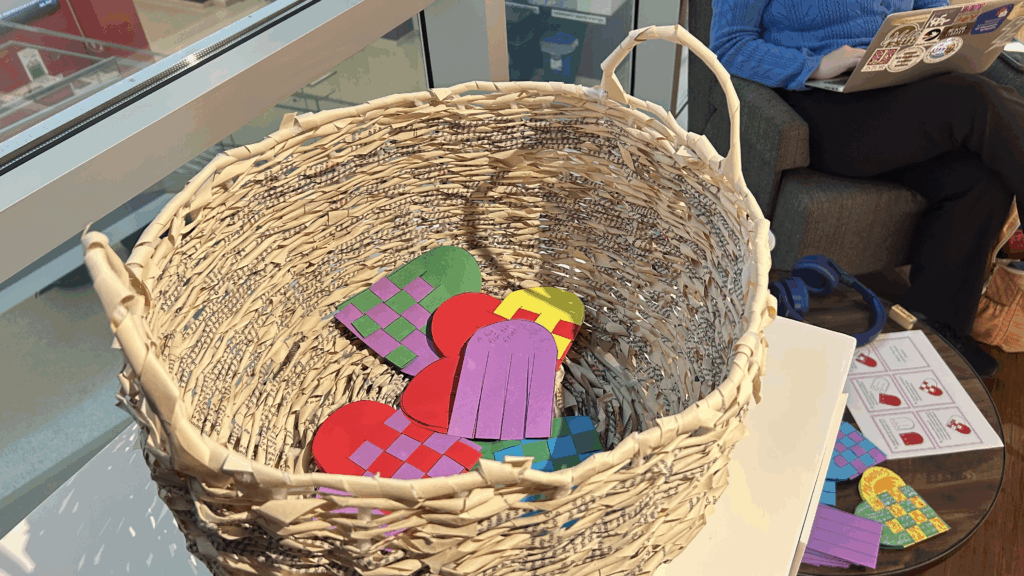
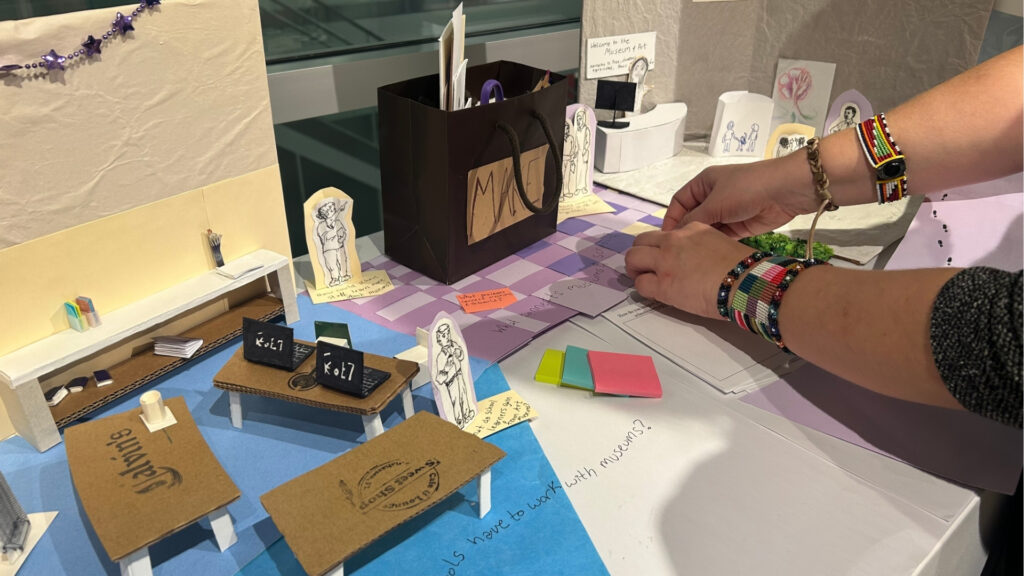
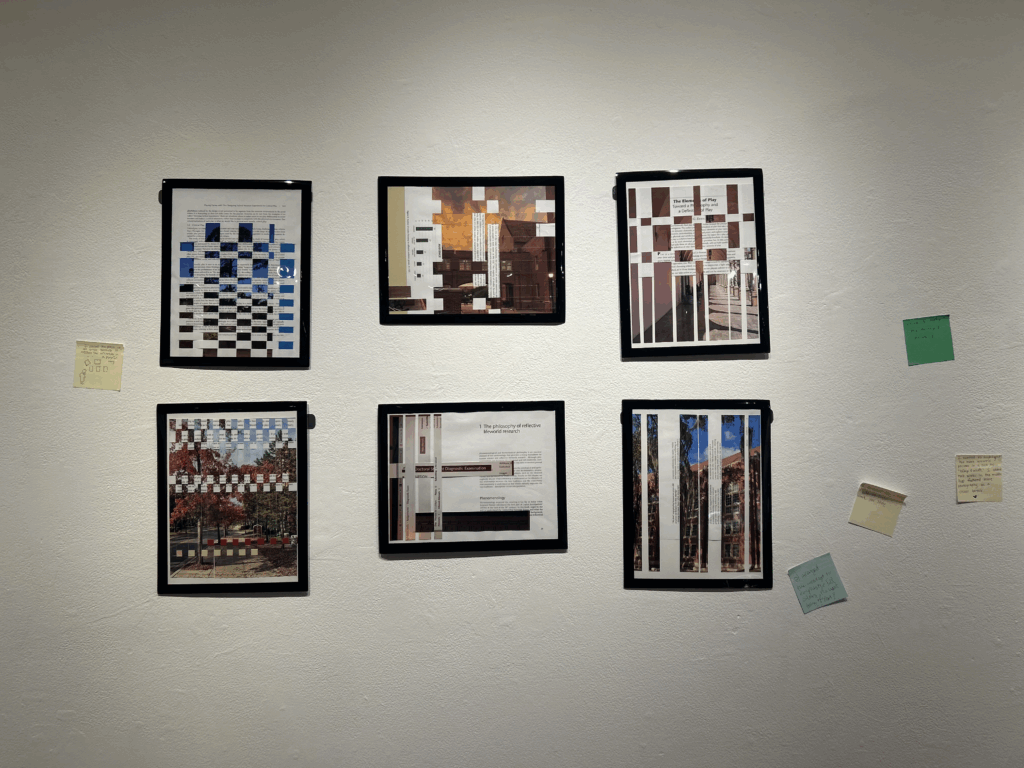
Their voices, research interests, and subjectivities have been embodied and materialized in the interactive activities: Ashley focused on role-playing and invited visitors to experience curation by arranging the works of art she created using literature she read and photos from Florida State University. Zoe focused on a sense of belonging and how research is a block-building process with prompts for people to engage with art-making and writing with hanging rings and blocks. Catherine displayed how she transformed the interview data about her research into visual narratives and invited visitors to participate under relevant themes. Audrey demonstrated the pedagogical model for visitors to interact with and ponder questions about collaboration between schools and museums. Dianna showed the basket she built from the studies she read to reflect on the meaning-making journey in the literature review. She also invited people to create a heart basket interwoven with two pieces of paper, where they can be prompted to reflect on their passions and identities, or on other thoughts, and document it on the heart. In addition, the researchers also collectively provided a panel with different research themes for visitors to develop their own research topics. Here, we learn more about their exhibition-developing process and reflection:
“One of the most rewarding parts of this experience for me has been the increased sense of community. As we discuss in our exhibition, doctoral research can be a really isolating and lonely process, so creating space to come together through dialogue was really powerful. Having the opportunity to then literally bring our research together in an exhibition was a fun and creative method of pushing beyond the sense of community Warp & Weft created to invite the entire FSU community to be part of our journeys.”
-Zoe Hume“I really enjoyed the process of working together to show different ways we visually think of this doctoral journey. I resonated with Ashley’s process of moving sections and ideas around – as if curating the dissertation. I think the exhibition highlights how unique the process is even when taking the same steps to complete it.”
-Dianna Bradley“When I first joined the program, I knew that collaborative work was an aspect I wanted to make integral to my experience. I wanted to avoid the prospect of being an island, which has often been the feeling as an art teacher. I also wanted to explore the intersections of each of our works and celebrate the diverse approaches we all brought to the installation.”
-Catherine Usewicz“My work at the intersection of formal (school) and informal (museum) learning has often led me to think about what these environments have in common and how they can work across organizational differences. My PhD research aims to visualize the learning that happens through this kind of work. In the exhibition, I was asking everyone to make those processes and features visible with me through how they think art museums and schools can combine forces in education.”
-Audrey Jacobs“I appreciated the sense of community we built leading up to the exhibition. Since most of us are not on campus, meeting over Zoom helped us maintain the connections we formed during the coursework phase of the doctoral program. It was incredibly rewarding to see the ideas and prototypes everyone had shared over the past several months come together in the gallery. I thought it was interesting how each of us developed entirely different activities and works of art. Even though we’re all navigating the dissertation process, our art and gallery activities reflect how varied everyone’s doctoral journey can be.”
-Ashley Williams
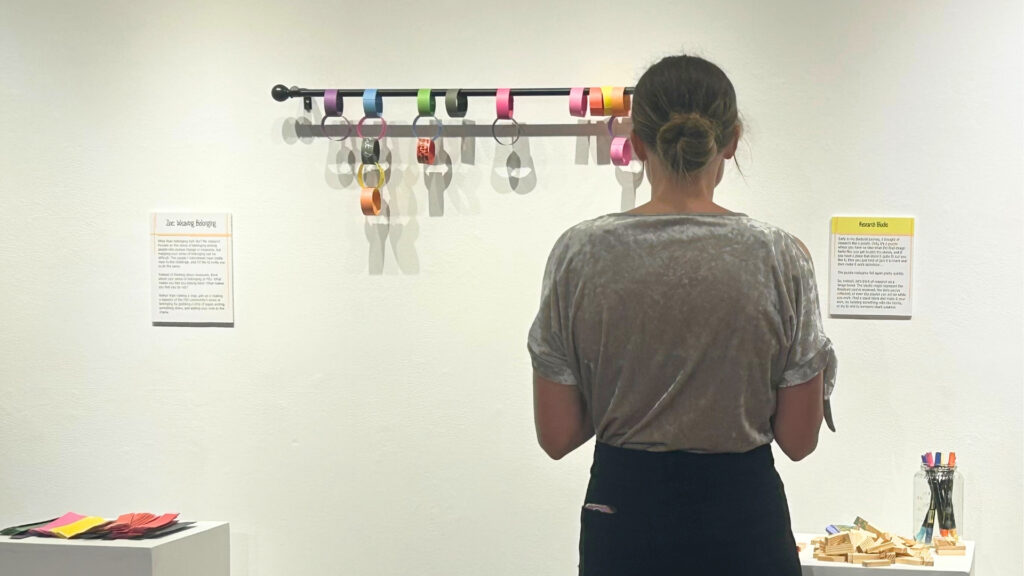
Engaging different stages of the research processes not in a scholarly paper but through interactive activities may also shed light on how we can think about these topics creatively and what possibilities it may bring to us.